


Key insights: LED Solar Simulators, Spatial Uniformity, Independent Wavelength Control
In a well-designed LED solar simulator, blue, green, red, and near-infrared do not merely coexist – they work in harmony across the full illumination field.
Spatial uniformity is one of the fundamental measures of solar simulator performance. Ideally, every region of a photovoltaic device receives the same irradiance so that measured differences reflect the device itself rather than variation in the illumination source.
For modern multi-channel LED solar simulators, however, there is another important question:
Is each individual wavelength uniform across the test area, or only the combined spectrum?
The distinction matters because many solar simulators specify spatial uniformity for the total illumination field. A system may therefore produce excellent overall uniformity while individual portions of the spectrum vary spatially.
For a fixed-spectrum source, that difference may not always be apparent. For an LED solar simulator with independently controlled wavelength channels, it can directly affect an experiment.
The LumiSun™ solar simulators are designed to provide Class A+ spatial uniformity for each individual wavelength channel as well as for the combined spectrum.
Uniform Irradiance Does Not Necessarily Mean Uniform Spectrum
A simulated solar spectrum is produced by combining the optical output from multiple wavelengths. Each wavelength contributes its own spatial illumination pattern to the overall field.
If one region receives slightly more blue light while another receives slightly more red or near-infrared light, the differences can partially compensate when all wavelengths are summed together. The resulting total irradiance may still appear highly uniform even though the spectral content varies across the sample.
That distinction is illustrated in Figure 1.
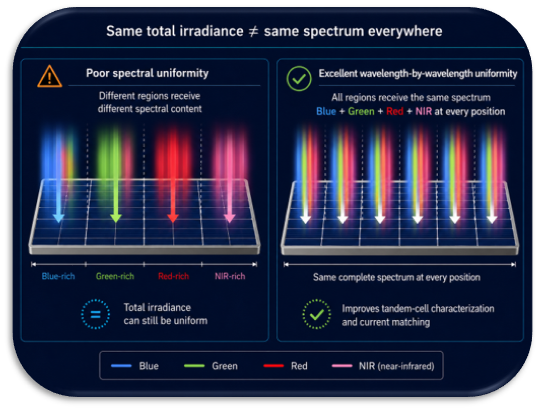
Figure 1. Same total irradiance does not necessarily mean the same spectrum everywhere.
In the example on the left, different regions of the photovoltaic device receive different proportions of blue, green, red, and near-infrared light even though the total irradiance can remain uniform. With wavelength-by-wavelength uniformity, shown on the right, each region receives the same complete spectrum.
This leads to an important distinction:
Spatial irradiance uniformity and spatial spectral uniformity are not the same parameter.
For accurate photovoltaic measurements, both can matter.
Independent Wavelength Control Raises the Bar
One of the key advantages of LED solar simulation is the ability to electronically control spectral channels independently.
The LumiSun design incorporates multiple independently controlled wavelengths that can be adjusted for spectral tuning, current-matching optimization, layer-specific characterization, tandem-cell research, perovskite optimization, and degradation studies.
Once wavelength becomes an experimental variable, the spatial uniformity of that wavelength becomes important as well.
Suppose a researcher increases the blue spectral output during characterization of a tandem photovoltaic device. Ideally, the experiment changes only the amount of blue illumination reaching the device.
If that optical output is spatially nonuniform, however, one region of the cell may receive a larger spectral change than another. The experiment has then introduced two variables simultaneously: a change in spectral content and a change in its spatial distribution.
That becomes increasingly important for tandem and multijunction cells because different junctions respond to different portions of the spectrum. It can also affect current-matching measurements, EQE and spectral-response studies, perovskite characterization, layer-specific measurements, and wavelength-dependent degradation testing.
The LumiSun design therefore targets Class A+ uniformity not only for the complete illumination field, but for each individual wavelength used to create it.
Uniformity – Wavelength by Wavelength
The practical goal is straightforward: every region of the device should receive the same intended spectral content.
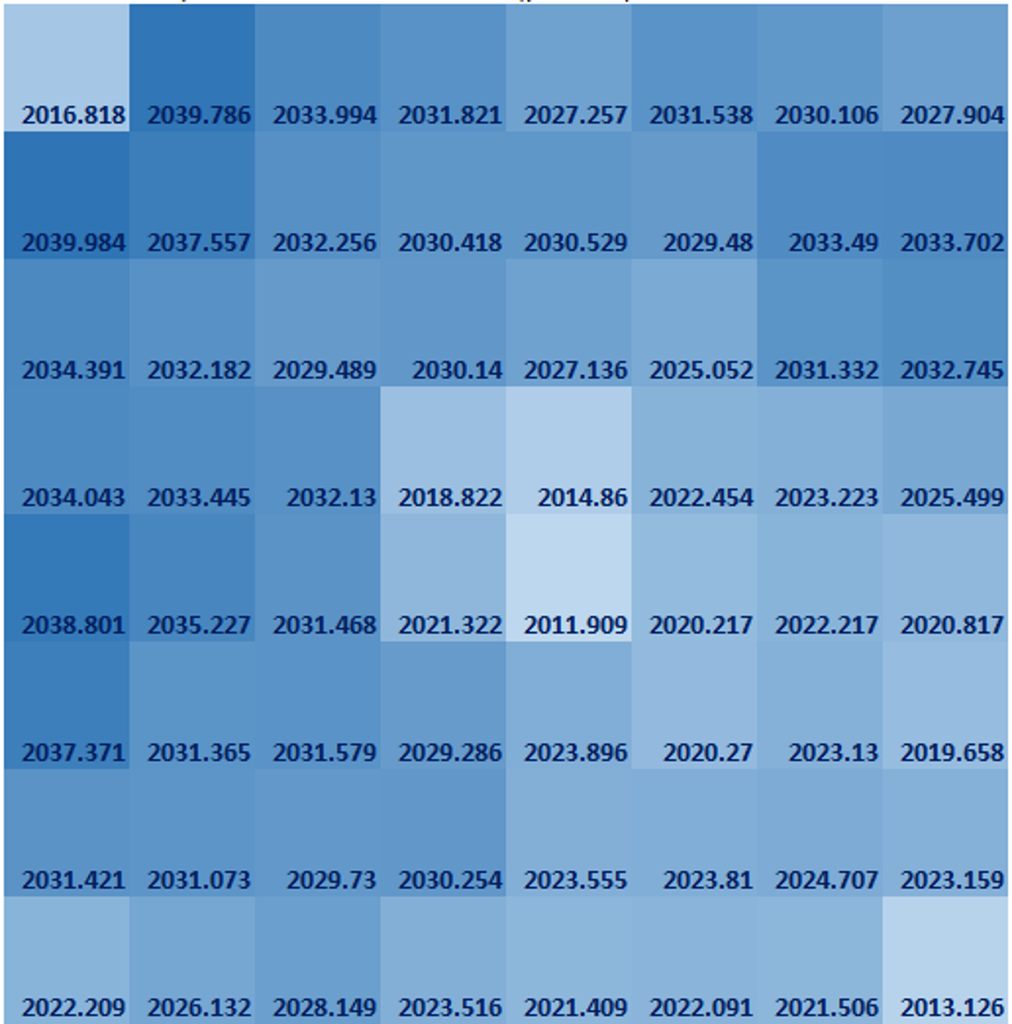
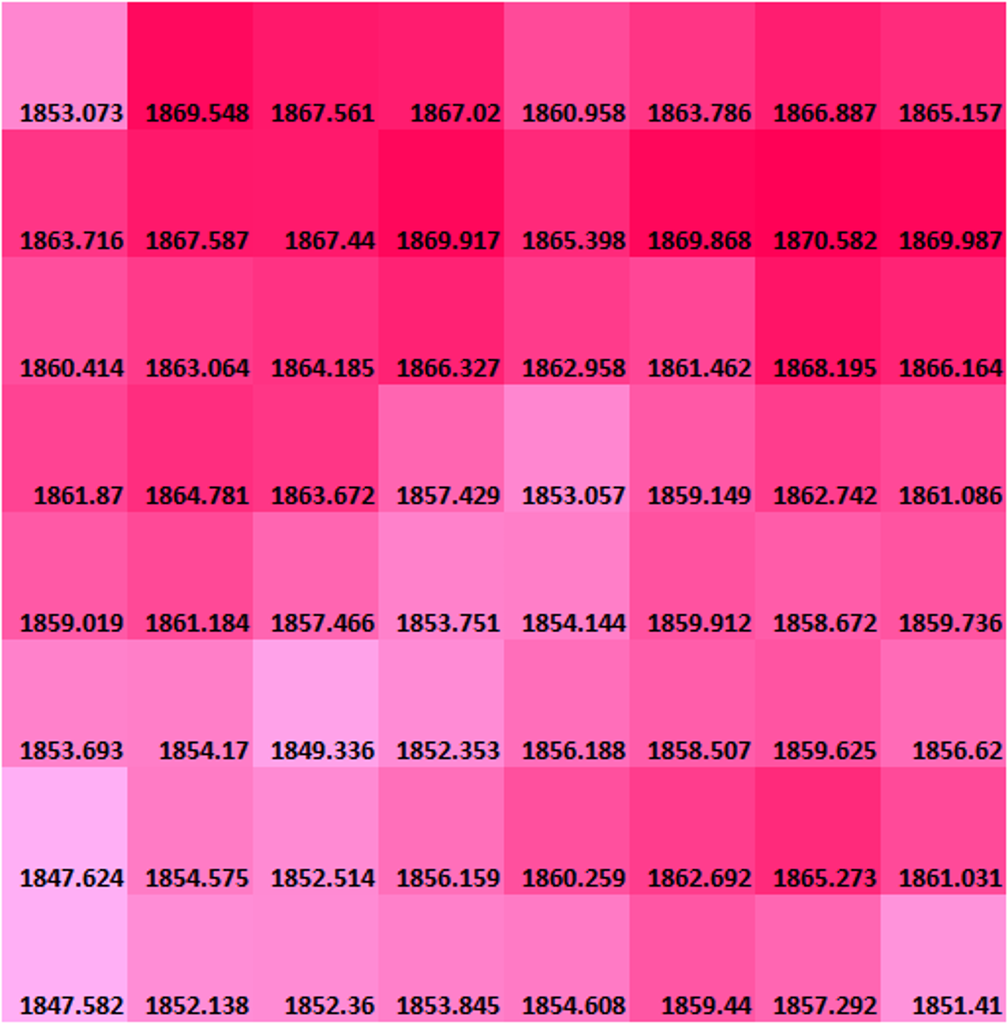
Figure 2 shows measured spatial-uniformity data for the LumiSun-50 LED solar simulator for the combined spectrum and discrete wavelength bands.
Measurements were taken over an 8 × 8 grid across the illumination field, exceeding the 5 × 5 grid required by IEC 60904-9. The measured irradiance remains highly consistent across the field, with nonuniformity of <0.63% for the complete spectrum and <0.69%, <0.62%, and <0.74% for the representative 400–500 nm, 600–700 nm, and 700–800 nm bands, respectively.
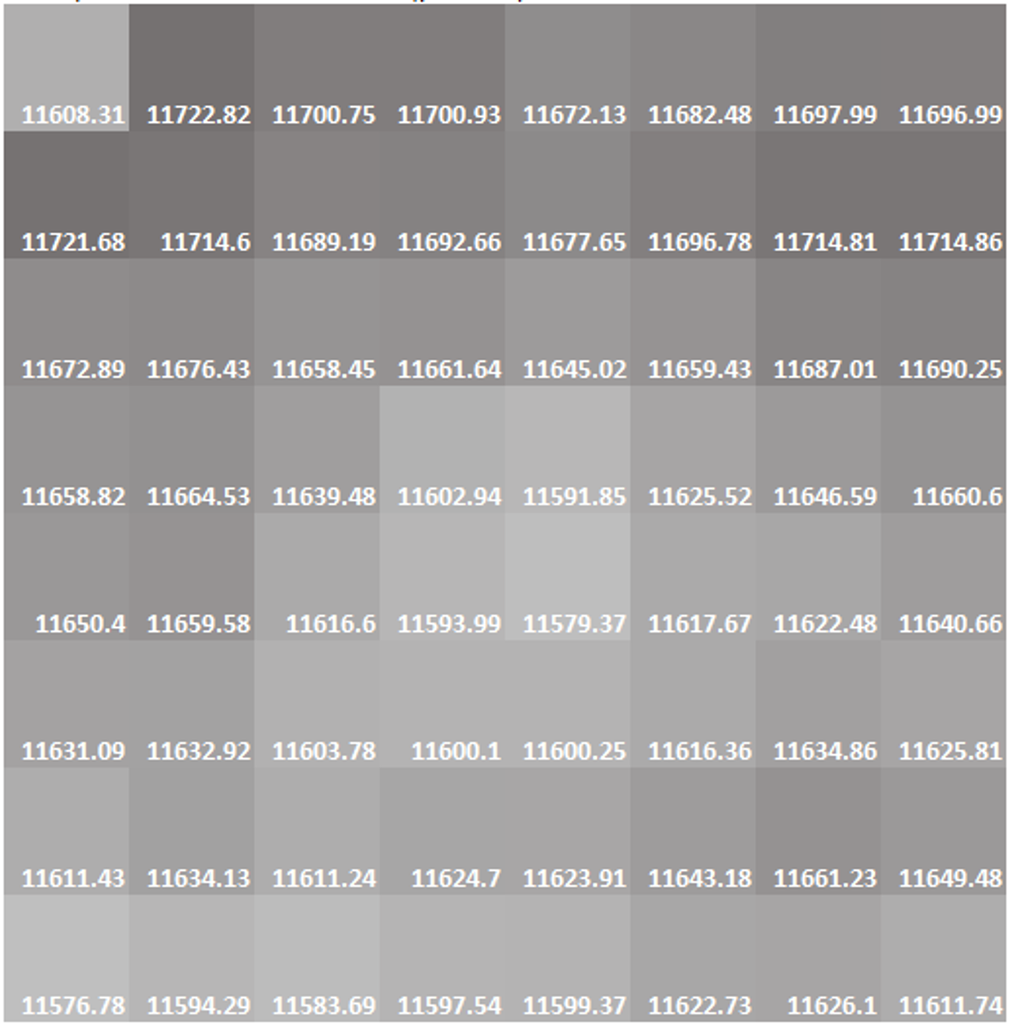
Combined spectrum < 0.63% nonuniformity
400 – 500 nm < 0.69% nonuniformity

600 – 700 nm < 0.62% nonuniformity
700 – 800 nm < 0.74% nonuniformity
Figure 2. Representative spatial-uniformity maps for combined LumiSun-50 spectrum and discrete wavelength bands. Measured irradiance across the illumination field demonstrates low nonuniformity for the combined spectrum and representative wavelength bands.
The maps show very consistent measured irradiance across the illumination field, with nonuniformity below 0.8% for the complete spectrum and for each of the representative wavelength bands shown.
For tandem-cell characterization, for example, a researcher can alter the irradiance delivered to one spectral region while minimizing unintended spatial variation across the photovoltaic device. The same principle improves current-matching studies, layer-specific measurements, and degradation experiments in which selected wavelength ranges may be emphasized or reduced. These are among the principal benefits identified for LumiSun individual-wavelength uniformity.
Uniformity Beyond One Exact Plane
Laboratory samples do not always remain at precisely the nominal illumination plane. Photovoltaic devices may be mounted on thermal stages, held in fixtures, positioned beneath electrical probes, placed in environmental chambers, or incorporated into automated test systems. Device thicknesses can also vary.
Optical design therefore affects not only uniformity at the nominal working distance, but how quickly that performance changes when the sample position changes.
The LumiSun optical system images the illumination field onto the sample plane. This approach reduces sensitivity to changes in working distance and sample height while improving repeatability and tolerance to fixture variations.
Figure 3 illustrates this behavior for the LumiSun-220.
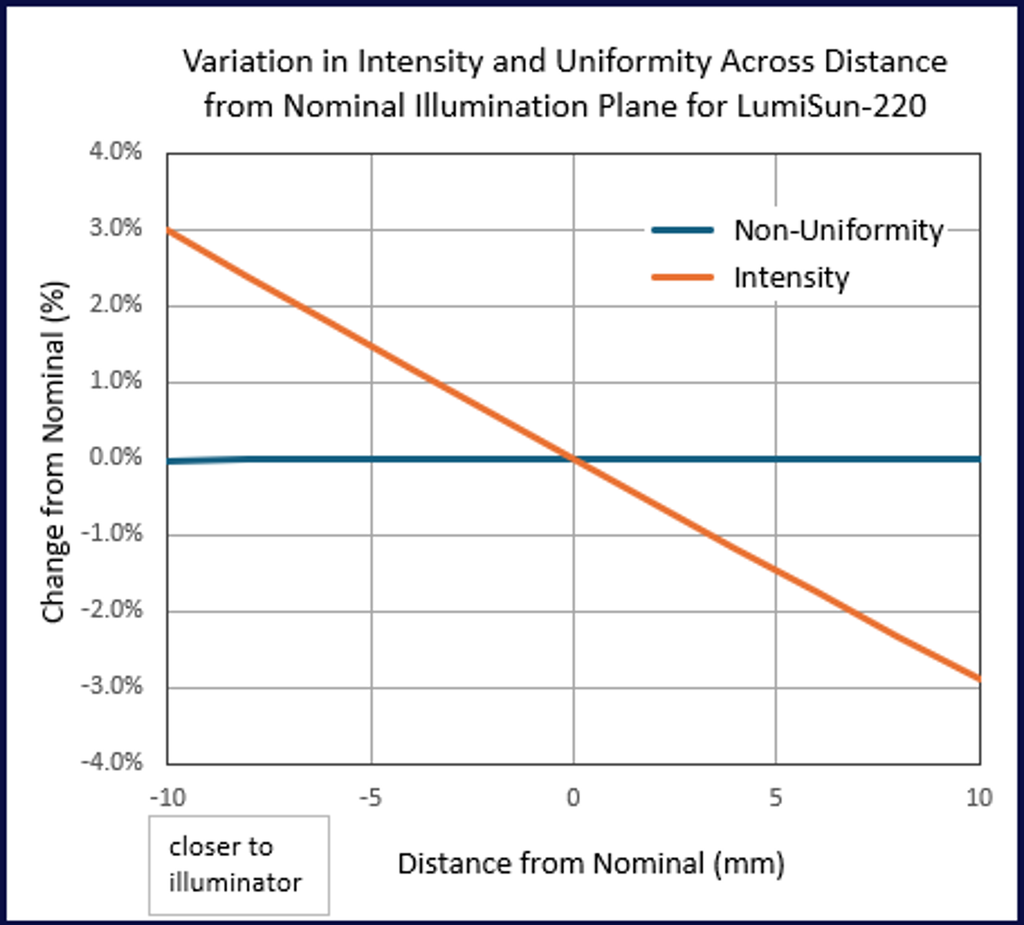
Figure 3. Minimal variation in intensity and uniformity with distance from the nominal illumination plane for LumiSun-220.
Nonuniformity remains essentially unchanged over a ±10mm displacement from the nominal plane, while irradiance varies by less than 3%.
The data show a nonuniformity change of less than 0.005% over ±10 mm, while intensity changes by less than 3% over the same range.
This distinction is useful. Moving away from the nominal plane causes a very small expected change in irradiance, but the illumination field remains highly uniform.
For practical research systems, that provides greater tolerance to sample-height differences, fixtures, chambers, and changing experimental configurations.
The Same Spectrum at Every Position
As photovoltaic technologies become more sophisticated, the illumination used to characterize them must provide more than excellent IEC Class performance.
Overall spatial uniformity remains essential, but independently tunable LED systems introduce another performance consideration: whether every wavelength illuminates the device uniformly on its own.
This is particularly important when spectral channels are intentionally adjusted for tandem and multijunction current matching, perovskite research, EQE and spectral-response measurements, or wavelength-dependent degradation studies.
The LumiSun solar simulators are designed for independent wavelength control with Class A+ spatial uniformity for each wavelength as well as for the combined spectrum. Its imaging optical system also helps maintain that uniformity as practical sample conditions and working distances vary.
The result is not simply a uniform amount of light, but a more uniform spectrum of light across the device under test.
Uniformity is a bright idea – especially when no wavelength gets left in the dark.